

Moving from
France to Switzerland

How It Works
Why choose us?
Experience is the key of success and that’s what our service providers have in abundance
5000+
50+


500+
home
improvements


Find help quick & easy!
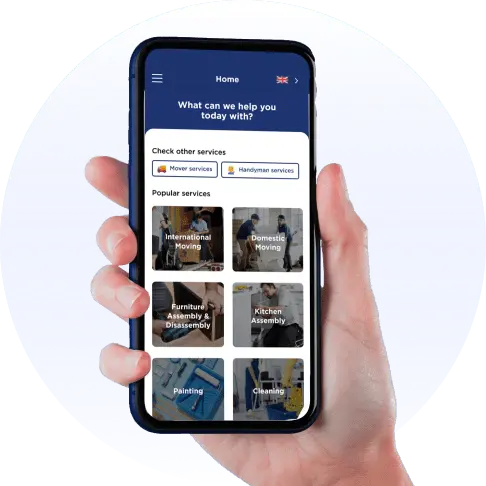
Moovick is an all-in-one platform that provides clients with on-demand, professional Service Providers for moves and home renovation jobs in real-time for their day-to-day needs.
Car
Van
3.5T Trucks
7.5T (+) Trucks

Car (Taxi / Combo)
Perfect for small boxes, airport pick ups and luggage transfer.

Van (7-17 m3)
Great for moving studio or one bedroom apartments with basic furniture items and boxes.

3.5T Truck (20-24 m3)
Best for 1-2 bedroom apartments, small homes moves and commercials goods.

7.5T (+) Trucks
Best for 2 to 3 room apartments and upto 10 standard size pallets
One app for all your moving needs
Download our app


Things To Know Before Moving From France To Switzerland
One of the most significant life decisions is to relocate to a new nation. Many French residents find Switzerland a great place to live because of its strong economy and high quality of life. Moving from France to Switzerland requires careful planning. There are a lot of things you need to know, including visa requirements and how to get through customs.
This guide will help you plan every step of your move.

FAQs
Securing a visa for Switzerland depends on your specific situation, whether you are relocating for a job, your studies, or family reasons. For most non-EU citizens, the process starts at the Swiss embassy in your home country, where you must apply for a long-stay visa before travelling. You will need to provide key documents, including your passport, a valid employment contract, and proof of financial stability.
There is even a specialized path for wealthy individuals known as "lump-sum taxation, which grants residency based on a tax agreement rather than traditional employment. Once you arrive, the most important rule is to register at your local town hall within 14 days to officially receive your residence permit.
There are many good reasons for moving to Switzerland. In 2024, the average gross monthly salary was about CHF 6,500, which is much higher than the average in France. The unemployment rate is also very low, at about 2–3%, indicating that jobs are very secure.
The Swiss work culture puts a lot of emphasis on balancing work and life. They offer a lot of vacation time and reasonable working hours. Cities like Geneva, Zurich, and Basel are home to many multinational companies in finance, pharmaceuticals, and technology, as well as international organisations.
Switzerland is also known for topping lists of the best quality of life. The country has great public services, good infrastructure, low crime rates, and a clean natural environment. The quality of healthcare in Switzerland is better than most European standards, and the quality of education also excels across all levels.
Professional movers from France to Switzerland are experienced and fully dedicated to international moving. Well-known shipping companies handle packing, transport, customs clearance, and delivery. They understand what is needed for cross-border moving from France to Switzerland and will safely deliver your possessions there.
France-to-Switzerland relocation services go beyond just moving. Relocation consultants assist with finding a place to live, navigating local bureaucracy, and even finding good schools in the area for the children. You can also look for local movers in France with partnerships with Swiss moving companies for a smooth move.
Spring, from April to June, is usually the best time to move to Switzerland. The weather is nice, school's out, and the housing market is active. With the right preparation, a winter move can be smooth and efficient, and it's also cost-effective. For detailed tips, check out our guide to preparing for an international move in winter.
It is also advisable to start planning at least 3-6 months before your actual move date. This gives you time to get work and residence permits, find a place to live, book the preferred movers, and take care of necessary paperwork without any trouble.
Geneva is home to international organisations like the United Nations, and because French is the main language, it's easier to adjust if you already speak it. The rent per month for a one-bedroom apartment in the city centre is around CHF 2,000-2,500.
Zurich, Switzerland's largest city, is a centre for finance and tech. Here, you can find good jobs, and it's easy to take nature walks. Rent in this city is about CHF 2,000-2,800 each month.
Basel is located at the tri-border where Switzerland, France, and Germany meet, which is a great choice if you're commuting across borders for work. The pharmaceutical industry is the dominant industry here, with companies such as Novartis and Roche. Monthly rent usually averages around CHF 1,500-2,000.
It’s advisable to start looking for a place to live two or three months before you move, and use websites like Homegate and Immoscout24. Getting an apartment is competitive, so contact landlords as soon as you see a listing you like, and have all your paperwork ready to go.
Most moves from Germany to the UK are conducted by road. The route depends heavily on your origin city in Germany (where you’re moving from in Germany) and your final destination in the UK (where you decide to live in the UK).
| Route | Distance | Key Attractions | Primary Industries |
| Paris to Geneva | ~500 km | International organizations, proximity to France | Diplomacy, finance, and luxury goods |
| Lyon To Zurich | ~430 km | Financial hub, cultural scene | Banking, technology, insurance |
| Strasbourg to Basel | ~140 km | Tri-border location, museums | Pharmaceuticals, life sciences |
| Nice to Lausanne | ~460 km | Lakeside scenery, universities | Education, sports organizations |
Moving to Switzerland requires careful planning for a seamless transition. Here are some of the things to do to prepare you for the move:
1. Make sure to have these important documents: your passport (make sure it's in good shape), your job agreement, proof of where you're staying, health insurance info, and your bank statements. If you're moving with your family, also bring your kids' birth certificates, school records, and medical records.
2. Follow the relocation checklist from France to Switzerland:
- Get rid of stuff you don't use anymore.
- Make a list of everything you're bringing for customs.
- Pack each room's items separately and label the boxes clearly.
- Also, pack a special box with the things you'll need during your first week.
Switzerland lets you bring your personal stuff without paying duty if you've owned it for at least half a year. Make sure to fill out Form 18.44 before you get there. You'll need a list of what you're bringing, proof of your move, and your ID.
Here’s a quick rundown of what rent and moving from France to Switzerland might cost:
- Small studio (20-25m³): Expect to pay around €2,000-€3,500
- One-bedroom place (30-35m³): This will probably be in the €3,500-€5,000 range.
- Two-bedroom apartment (45-50m³): Budget about €5,000-€7,000.
Please note that prices are usually dependent on the size of your load during the move.
It is also important to keep in mind that when you first get there, you'll have to pay a deposit for your place (usually three months' rent), the first month's rent itself, and set up health insurance (CHF 350-400 each month). There might be some admin fees too.
To get the perfect deal for you and save money, request quotes from different international moving services, consider shared loading if you don't have much stuff, pack your own boxes, and try to move during a less busy time for movers.
When it comes to language, France and Switzerland offer two very different experiences. France is famously protective of its language; French is the glue that holds the nation together. While you can get by with English in tourist hotspots or Paris boardrooms, daily life — from buying bread to sorting out your taxes —happens in French. It’s immersive, but it means you really need to learn the language to feel at home.
Switzerland is a different story entirely. It’s a country built on diversity, with four national languages: German, French, Italian, and Romansh. The language you hear on the street changes depending on where you are—French in Geneva, German in Zurich. Because the Swiss are so used to juggling languages, they are often much more comfortable switching to English to help you out, especially in business or bigger cities.
When you arrive in Switzerland, it is important to register with your local town hall within 14 days. You will also get your residence permit, which can be a B permit if you plan to stay for a while. If you want to open a bank account, you should go there in person. Make sure to take your passport, residence permit, and proof of address.
In Switzerland, everyone must obtain health insurance within three months of moving. Public schools are free and excellent. Usually, utilities are either included in your rent or you pay for them separately.
Moving from France to Switzerland can be great for career growth and lifestyle improvement. You can streamline your moving experience and enjot a stressfree transition with careful planning and help from professional moving companies.
Get your free quotes for moving to Switzerland from Moovick and start planning your new life in the Swiss Alps.
1. Do I need a visa to move from France to Switzerland?
French citizens don't require a visa. For stays longer than 90 days, register with your local commune within 14 days and apply for a residence permit.
2. How long does it take to get a Swiss residence permit?
Processing typically takes 4-8 weeks after submitting your application. You can start working once registered, and your application is pending.
3. Can I keep my car registered in France while living in Switzerland?
You must re-register your vehicle in Switzerland within one year. Import is duty-free if you've owned the car for at least six months.
4. What healthcare coverage do I need in Switzerland?
Health insurance is mandatory for all residents. You must obtain basic coverage within three months of arrival. Premiums average CHF 350-400 monthly for adults.
Most Popular International Moving Service Routes